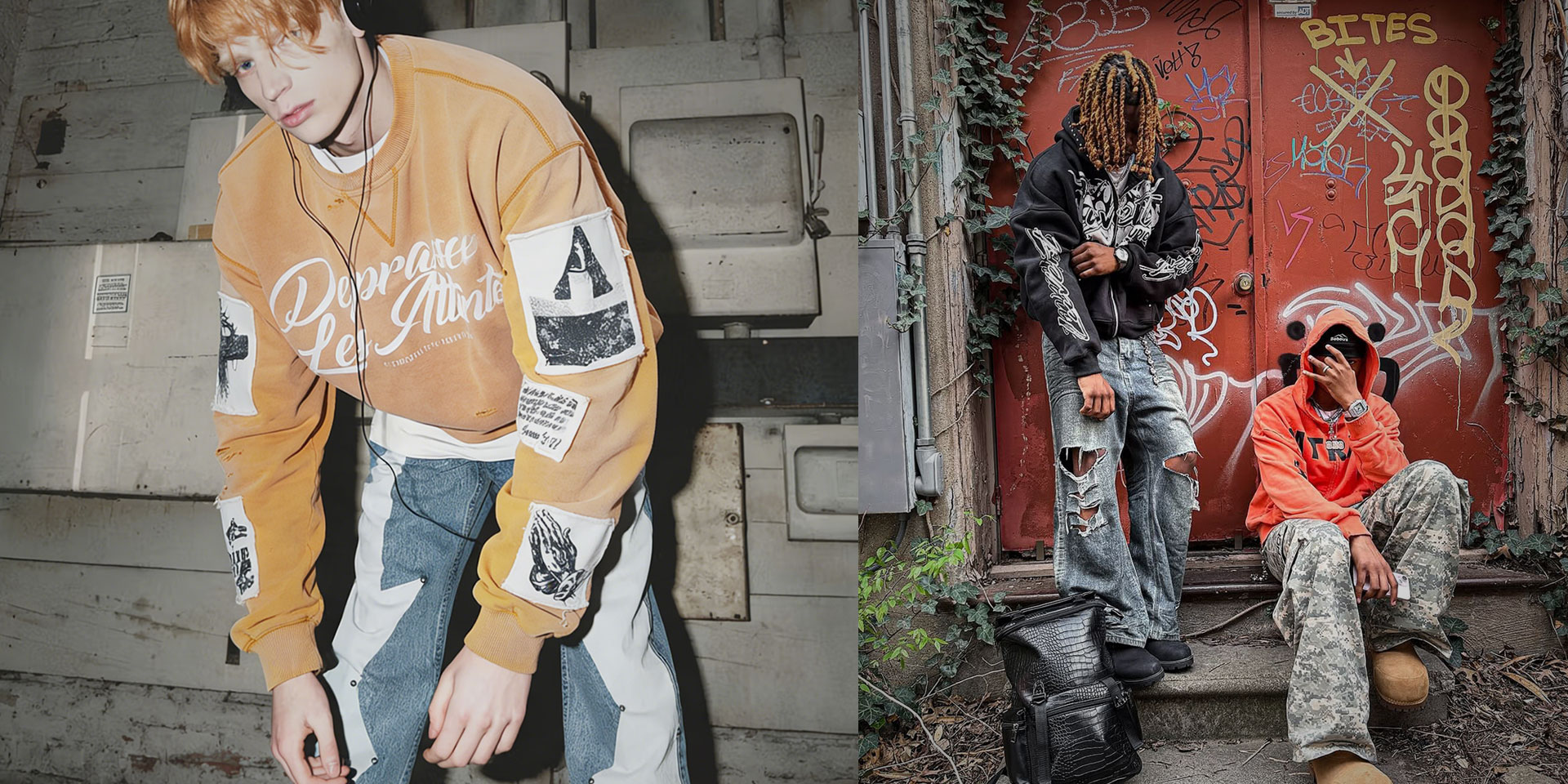
Your Next Drop Deserves Better Than a Guessed Wash: Acid Wash, Pigment Wash, Enzyme Wash, and Distressing on Shirts — What Actually Separates Them
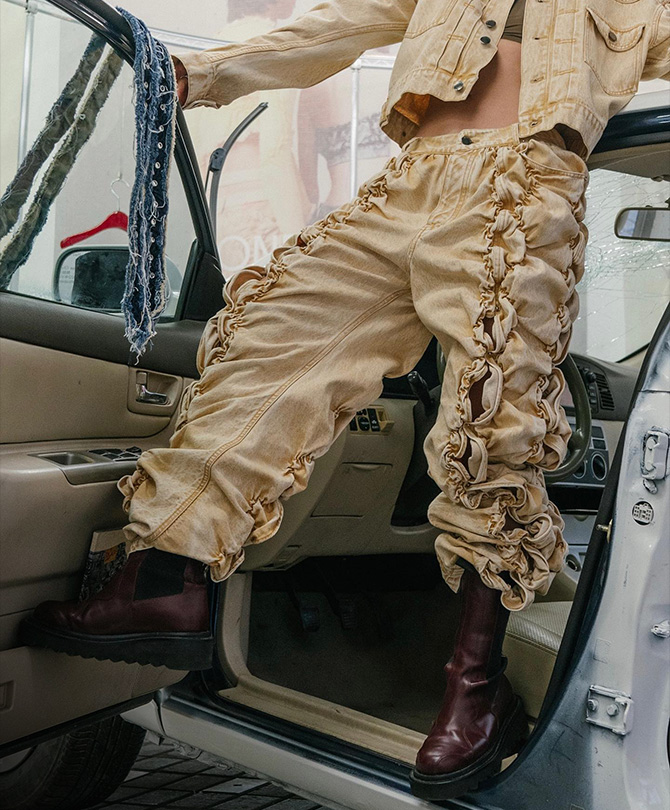
Is higher GSM always better for luxury sweatpants?
A heavyweight hoodie or a pair of 500gsm sweatpants looks simple on a rack, but most production problems start before sewing even begins. In recent years, the streetwear industry has become obsessed with a single metric: GSM (Grams per Square Meter). Brands slap "500 GSM Heavyweight Fleece" on their tech packs and marketing materials, assuming that a higher number automatically guarantees a premium, luxury feel. This fixation has turned a basic fabric measurement into a proxy for quality, leading many product development teams to make critical sourcing errors that only become obvious when the bulk order arrives.
The reality of streetwear manufacturing is far more complex than a single weight specification. An exceptionally heavy fabric with poor yarn quality, inadequate shrinkage control, or unstable wash execution will feel stiff, drape awkwardly, and shrink unevenly after the first wash. The true technical difficulty in custom streetwear development is not sourcing heavy fabric; it is engineering that fabric to hold a specific silhouette, survive aggressive wash techniques, and maintain sample-to-bulk consistency across thousands of units. Procurement teams for established streetwear brands need to look past the GSM trap and evaluate the entire production ecosystem.
What does GSM actually measure in luxury sweatpants production?
GSM simply measures the physical weight of a one-meter by one-meter square of fabric. It does not measure softness, durability, drape, or yarn quality. A 400gsm fabric made from low-grade, short-staple cotton will feel rough and pill quickly, while a 320gsm fabric knitted from premium long-staple combed cotton will feel luxurious, hold its shape, and perform better over time.
When product development teams evaluate fabric sourcing options, they often mistake weight for density. GSM is just a raw mass calculation. It tells you how heavy the fabric is, but it tells you nothing about the construction of the knit. For example, a French Terry fabric and a brushed fleece fabric can both weigh 450gsm, but they will behave entirely differently on the sewing floor and on the human body.
The yarn quality plays a much larger role in the final hand feel than the weight alone. Premium streetwear production relies on combed or ring-spun cotton, where shorter fibers and impurities are removed before spinning. This creates a smoother, stronger yarn. If a factory uses lower-grade, open-end carded yarn to hit a high GSM target, the resulting sweatpants might be heavy, but they will lack the refined drape and soft hand feel expected by the consumer. Furthermore, the knitting tension matters. A loosely knitted fabric can achieve a high GSM if thick yarns are used, but it will lack structural integrity and be prone to excessive shrinkage and bagging out at the knees.
Does higher GSM always mean better quality in premium sweatpants?
No. Pushing GSM too high without adjusting the pattern engineering or considering the garment's intended drape often ruins the fit. Extremely heavy fabrics can create bulky, rigid seams that bunch uncomfortably, throw off the silhouette balance, and make the sweatpants feel like stiff armor rather than luxury loungewear.
There is a point of diminishing returns when increasing fabric weight. Many independent brands with real traction assume that jumping from 350gsm to 500gsm will instantly elevate their product into the luxury tier. However, this decision often introduces severe manufacturing challenges. Heavyweight fabrics require specialized cutting equipment, heavy-duty sewing needles, and adjusted sewing tolerances. If a general apparel factory attempts to sew 500gsm fleece using standard machinery, the result is often skipped stitches, broken needles, and uneven seams that pucker after washing.
Moreover, higher GSM drastically affects the pattern development process. You cannot take a tech pack designed for a 300gsm fabric and simply substitute a 500gsm fabric without re-engineering the pattern. The added thickness consumes more ease, making the garment fit tighter than intended. The drape also changes completely; heavy fabrics fall straight down and do not conform to the body as easily. This can lead to silhouette imbalance, where the sweatpants look excessively boxy or rigid. For established streetwear brands, the goal should be finding the optimal weight that supports the intended fit, rather than blindly chasing the highest possible number.
What happens between fabric spec and finished sweatpants in bulk production?
The gap between an approved fabric swatch and a finished bulk order is where most production failures occur. Real custom streetwear development requires rigorous tech pack review, pattern adjustment for shrinkage, pre-production sampling, and strict bulk cutting controls to ensure that the heavy fabric behaves consistently across all sizes.
The production process for premium sweatpants is highly technical. It begins with a thorough tech pack review, where a specialized streetwear factory evaluates the design intent against the reality of the chosen fabric. If the design calls for complex seam work or heavy distressing on a 450gsm fabric, the factory must anticipate how the fabric will react. Next comes pattern development. Because heavyweight cotton fabrics are notorious for shrinkage, the factory must conduct shrinkage testing before finalizing the pattern. If the fabric shrinks 5% in length and 3% in width after washing, the pattern must be graded larger to compensate.
Once the fabric is sourced and the pattern is adjusted, the factory moves to sampling. This is where print, wash, and embroidery testing occur. Heavyweight fabrics absorb dyes and washes differently than lighter fabrics, and dense fleece can make embroidery pucker if not stabilized correctly. After the pre-production sample is approved, bulk cutting begins. This is a critical stage; cutting heavyweight fabric in stacks that are too high can cause the bottom layers to shift, resulting in size discrepancies. Finally, sewing, finishing, and final inspection must all adhere to strict tolerances. The most common supply chain problems—such as sample-to-bulk mismatch, wrong graphic placement, trim substitution, and batch-level variation—usually stem from a lack of control during these intermediate steps.
Why does GSM behave differently in heavyweight fleece versus French Terry sweatpants?
GSM is not a universal standard across different knit structures. A 400gsm French Terry features unbrushed loops on the inside, providing a structured, breathable drape. A 400gsm brushed fleece has a fuzzy interior, making it feel thicker and warmer, but it often drapes more softly and is more prone to pilling.
Understanding the difference between fabric constructions is vital for procurement teams. French Terry and brushed fleece are the two dominant fabrics in streetwear sweatpants production, but they handle weight very differently. French Terry is knitted with loops on the back side. Because these loops are left intact, the fabric maintains a high level of structural integrity and breathability. A heavyweight French Terry (e.g., 400gsm to 500gsm) feels incredibly substantial, almost architectural, making it ideal for wide-leg pants or structured, oversized fits where the garment needs to hold its shape away from the body.
Brushed fleece, on the other hand, starts as a looped fabric but undergoes a mechanical brushing process on the inside to break the loops and create a soft, fuzzy texture. This brushing process actually removes a small amount of weight and weakens the fabric slightly. To achieve a 400gsm finished fleece, the initial knit must be heavier. While brushed fleece feels softer and warmer against the skin, it generally has less structural rigidity than French Terry of the same weight. It tends to drape more softly and can sometimes look slouchy if the pattern is not engineered correctly. Furthermore, the brushed interior is more susceptible to pilling over time, especially if the base yarn quality is subpar.
What should established streetwear brands actually check before approving a luxury sweatpants sample?
Procurement teams must evaluate more than just the fabric weight. A proper sample review should assess the hand feel, verify the shrinkage control after a wash test, check the ribbing match, examine the seam construction for bulkiness, and ensure the silhouette remains balanced when worn.
When evaluating a sample, the GSM is the least important thing to check—you already specified that in the tech pack. Instead, focus on execution. First, assess the fabric hand-feel differences between the raw swatch and the finished garment, especially if the sweatpants have undergone an enzyme wash or stone wash. The wash process can alter the texture significantly.
Second, conduct an independent shrinkage test. Wash and dry the sample according to the care label instructions and measure it against the original specs. If the sweatpants shrink unevenly or twist at the side seams (leg twist), the factory has failed to control the fabric tension during cutting or sewing.
Third, inspect the trims and finishing. The ribbing at the waistband and cuffs must match the body fabric in both color and weight. A common cost-cutting measure is using flimsy ribbing on a heavyweight garment, which causes the waistband to lose elasticity quickly. Examine the seam construction, particularly at intersections like the crotch gusset. If the factory has not adjusted their sewing techniques for heavyweight fabric, these areas will be overly bulky and uncomfortable. Finally, check the sample-to-bulk alignment potential. Ask the manufacturer how they plan to maintain this exact wash consistency and fit across a run of thousands of units.
For brands looking at China-based technical production, finding a partner that understands these nuances is crucial. A specialized custom streetwear manufacturer, such as Groovecolor, focuses on repeatable sample-to-bulk execution, ensuring that complex techniques and premium fabrics are handled with bulk-ready control rather than just producing a single good-looking sample. Ultimately, luxury sweatpants are not defined by a single number on a spec sheet. They are the result of meticulous fabric sourcing, precise pattern engineering, and a manufacturing partner capable of executing complex streetwear requirements consistently at scale.
How do wash techniques change bulk production risk for heavyweight sweatpants?
Wash techniques add a layer of unpredictability to heavy fabrics. Acid wash, stone wash, or enzyme wash can drastically alter the final GSM, hand feel, and dimensions. The true challenge is maintaining wash consistency across a bulk run without degrading the structural integrity of the premium fleece.
Many established streetwear brands incorporate complex wash techniques to achieve a vintage or distressed aesthetic. However, applying these techniques to heavyweight sweatpants requires a deep understanding of fabric chemistry and mechanical stress. An enzyme wash, for instance, uses biological enzymes to eat away at the cellulose in the cotton, softening the fabric and giving it a slightly worn look. While this improves the hand feel, it also reduces the fabric's weight and strength. A fabric that starts at 450gsm might drop to 420gsm after an aggressive wash. If the product development team does not account for this weight loss during the sourcing phase, the final product will feel lighter and less substantial than intended.
Stone washing introduces mechanical friction, which can be particularly harsh on heavyweight fleece. The physical abrasion can cause uneven pilling on the surface and weaken the seams. In bulk production, maintaining batch-level variation is the biggest hurdle. The wash effect on the first 100 units might look perfect, but as the pumice stones degrade or the enzyme concentration fluctuates, the subsequent units may look completely different. A specialized streetwear factory must implement strict controls, such as standardized wash loads, precise chemical measurements, and frequent visual inspections against an approved master standard, to ensure that every pair of sweatpants delivers the same premium aesthetic.
Why does oversized fit require real pattern development instead of simple size enlargement?
Creating a luxury oversized silhouette is not as simple as grading a standard pattern up two sizes. It requires meticulous pattern engineering to adjust the drop crotch, widen the leg opening, and reposition the inseam, ensuring the heavyweight fabric drapes cleanly without creating unwanted bulk.
A common mistake made by inexperienced brands is assuming that an oversized fit just means "bigger." If you take a standard sweatpants pattern and simply increase the dimensions, the result will look sloppy. The waist will be too large, the crotch will hang awkwardly, and the heavy fabric will bunch up around the ankles, creating an unflattering, balloon-like silhouette. True oversized or baggy fit sweatpants require intentional design. The waist must still fit securely, while the volume is added specifically to the thigh, knee, and calf areas.
When working with heavyweight fabrics like 500gsm French Terry, pattern development becomes even more critical. Heavy fabrics do not fold or drape easily; they tend to stand away from the body. If the pattern does not account for this rigidity, the sweatpants will look stiff and boxy. A skilled pattern maker will adjust the angles of the outseam and inseam to control the volume, allowing the heavy fabric to fall cleanly. They must also consider the articulation of the knee and the break at the shoe. This level of technical capability is what separates premium streetwear production from basic apparel manufacturing. It ensures that the final product looks intentionally designed, rather than simply oversized by accident.
What makes print and embroidery placement difficult on heavyweight sweatpants?
Heavyweight fabrics present unique challenges for decoration. Dense fleece can swallow screen prints or cause embroidery to pucker, while the thick seams make precise placement difficult. Factories must adjust their techniques, using specialized inks, underbases, and stabilizers to ensure the artwork remains crisp and durable.
Streetwear sweatpants often feature bold graphics, puff prints, or intricate embroidery. Applying these decorations to a 450gsm fabric is significantly harder than printing on a standard 200gsm t-shirt. For screen printing, the texture of the fabric plays a major role. Brushed fleece has a fuzzy surface that can interfere with the ink, causing the print to look faded or uneven. To achieve a solid, vibrant graphic, the factory must apply a thicker underbase (a layer of white ink printed before the colors) and use specialized inks that can bridge the texture of the fabric without cracking. Puff print, a popular technique in modern streetwear, requires precise temperature control during the curing process; if the heavy fabric absorbs too much heat, the puff effect will be inconsistent.
Embroidery on heavyweight sweatpants comes with its own set of risks. The density of the fabric requires heavy-duty needles and specific digitizing techniques to ensure the stitches penetrate cleanly. If the design is too dense, it can create a stiff, uncomfortable patch on the sweatpants that disrupts the drape. Furthermore, placing decorations near thick seams or pockets is challenging because the uneven surface can cause the embroidery hoop to slip or the print screen to misalign. Procurement teams must verify that their manufacturing partner has the technical expertise to handle mixed media decoration on heavy fabrics, ensuring that the artwork enhances the luxury feel rather than detracting from it.
How should brands compare a general apparel factory with a specialized streetwear manufacturer?
A general factory optimizes for speed and basic construction, often struggling with heavy fabrics, complex washes, and oversized patterns. A specialized streetwear manufacturer understands the cultural nuances, possesses the right machinery for heavyweight materials, and implements strict sample-to-bulk controls tailored to premium streetwear requirements.
When evaluating production partners, established streetwear brands must look beyond the initial quote. A general apparel factory might offer a lower price, but they are typically set up to produce lightweight, standard-fit garments like basic t-shirts or corporate uniforms. When tasked with producing 500gsm oversized sweatpants with an acid wash and puff print, their systems often break down. They may lack the heavy-duty sewing machines required to cleanly finish thick seams, or they might not have the specialized wash facilities needed to achieve consistent distressing. The result is often a prolonged development process, multiple failed samples, and a high risk of bulk production errors.
A specialized streetwear manufacturer operates with a different mindset. They understand that the aesthetic and the technical execution are inseparable. They anticipate the shrinkage of heavyweight cotton, they know how to adjust patterns for a boxy fit, and they have established protocols for managing the complexities of garment dyeing and complex finishing. More importantly, they recognize the importance of sample-to-bulk consistency. They build production systems that can replicate a highly technical sample across thousands of units without losing the premium feel. For brands with proven sales and clear product direction, partnering with a manufacturer that inherently understands the streetwear ecosystem is not just a sourcing decision; it is a strategic investment in product quality and brand reputation.